





Guides
Usage, CLI Options & Troubleshooting
Follow these steps to check status, apply settings, enable protection, and automate Windows Update control with WUB.
Step-by-Step Usage Guide
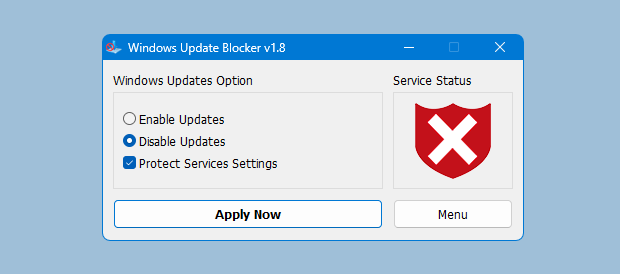
To manage Windows Update with WUB, check the status indicator, choose Enable or Disable, click Apply, and use Protect Service Settings to preserve your selection. This workflow keeps control predictable and easy to verify. Reboot if the status does not refresh immediately.
1. Check Status
Launch WUB and read the status indicator. Green means updates are active; red means they are blocked.
2. Apply Settings
Choose Disable or Enable and click Apply. WUB updates the Windows Update service configuration on the spot.
3. Protect Service Settings
Enable protection to stop Windows from reactivating update services without approval.
Command Line Arguments
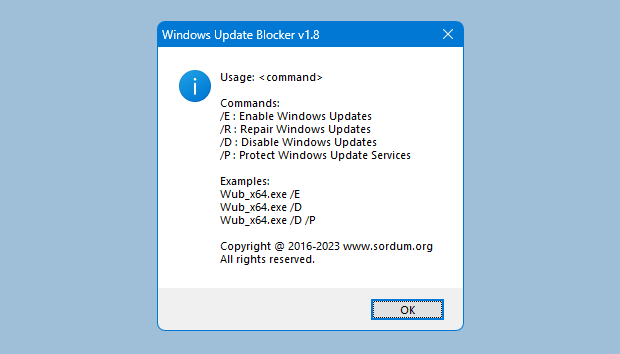
Use Wub.exe with parameters for scripting and automation. Run Command Prompt as Administrator when changing services.
- /D — Turn off Windows Update services.
- /E — Turn on Windows Update services.
- /S — Apply service protection.
Refer to the WUB command line screen for additional options and status output.
Service Commands (Reference)
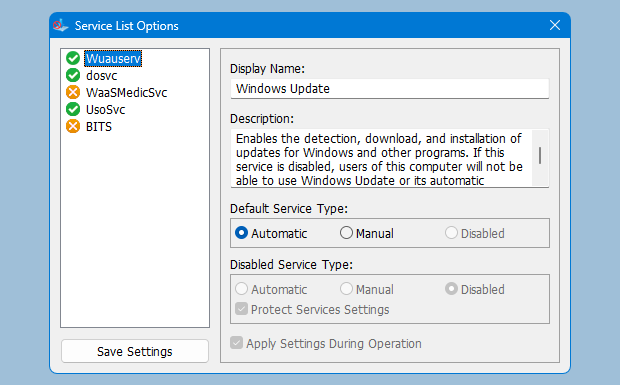
WUB automates service control for Windows Update. These commands illustrate the typical service changes applied.
sc stop wuauserv
sc config wuauserv start= disabled
sc stop bits
sc config bits start= disabled
sc stop dosvc
sc config dosvc start= disabled
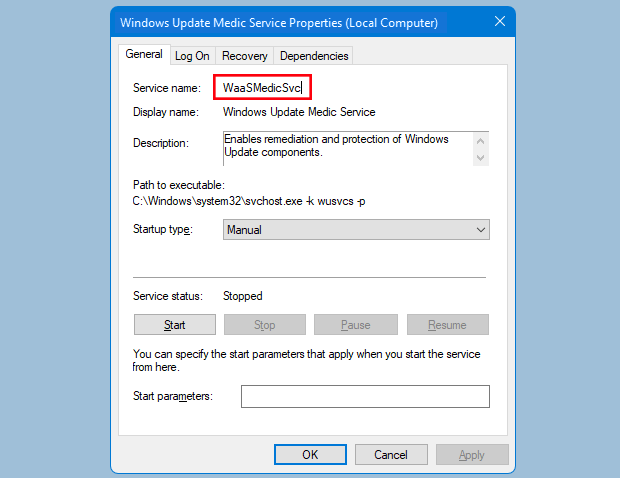
sc stop WaaSMedicSvc
sc config WaaSMedicSvc start= disabled
Antivirus Exclusions
If your antivirus blocks WUB, add the Wub.exe location to your allow list after verifying file integrity. This prevents false positives caused by service-level changes.
Keep the tool in a dedicated folder so exclusions are easy to manage and audit.
Troubleshooting Access Errors
- Run WUB as Administrator to modify services.
- Adjust conflicting policy settings if a managed device blocks changes.
- Reboot after changing service states if the UI status does not refresh.
If errors persist, review Windows Event Viewer logs for policy enforcement or service dependency issues.